

Introduction
What is a Translation Management System (TMS)?
A Translation Management System (TMS) is designed to streamline and manage the localization and translation of content at scale. It helps businesses handle the complexities of translating large amounts of content into multiple languages and dialects, ensuring consistency and quality. A TMS facilitates collaboration by organizing and managing translated assets effectively. It reduces manual work, improves turnaround times, and ensures high-quality translations—essential for global businesses.
As a simulated project, I chose to provide TMS-related consulting to a fictitious company named Bloodify. Bloodify offers a music and video streaming service positioned between Spotify and YouTube. With Bloodify’s rapid global growth, enhancing our TMS with Smartling will boost productivity and streamline localization.
Let’s explore Bloodify’s key business requirements, current challenges, and how Smartling can bridge these gaps to support its expansion.
Bloodify’s Key Business Requirements
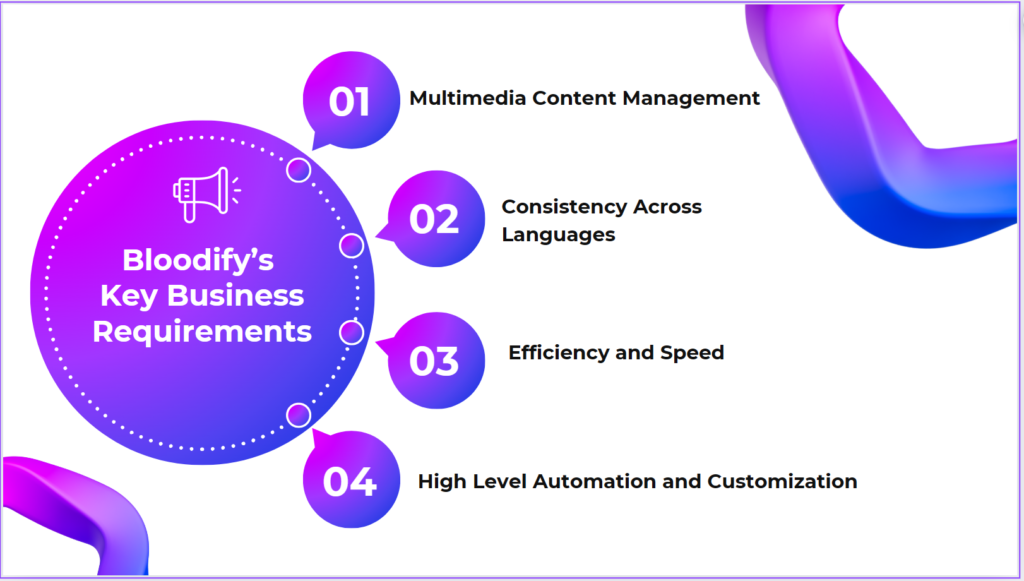
- Comprehensive Content Management: Bloodify, a music and video streaming platform, hosts diverse multimedia content including music, podcasts, videos, and app interfaces. A TMS should streamline the translation of all this content into 62 languages.
- Consistency: Maintaining a consistent tone and style across millions of tracks and thousands of playlists and podcast summaries is crucial. A TMS should ensure this using translation memory and glossaries.
- Efficiency and Speed: Frequent updates require quick localization turnarounds. A TMS should automate the translation workflow, reducing time-to-market for new content and features.
- High-Level Automation and Customization: The TMS should offer high-level automation and customization to increase productivity and reduce time and costs in the localization process.
Problems with the Current TMS
- Inconsistency in Quality:
- Using different vendors and external linguists without a unified quality assessment platform leads to inconsistencies.
- Delayed Feedback:
- The reliance on weekly reports delays the feedback loop, hindering timely improvements.
- Limited Automation:
- The current TMS setup lacks automation, resulting in extensive manual data handling.
Proposed Solution: Implementing Smartling
To address these challenges, I recommend implementing Smartling. Based on my research, Smartling offers a range of features and benefits that will significantly enhance Bloodify’s localization processes.
Key Features of Smartling:
- Cloud-Based Platform:
- Centralized system accessible from anywhere, ensuring all team members can collaborate in real-time.
- Real-Time Collaboration:
- Immediate feedback and collaboration between translators, editors, and project managers to improve efficiency.
- Automated Workflows:
- Reduces manual tasks by automating the translation process, from content submission to final delivery.
- In-Context Translation:
- Provides translators with context for each piece of content, ensuring accurate and culturally relevant translations.
- Translation Memory and Glossaries:
- Maintains consistency by reusing previously translated content and standardizing terminology.
- Robust Reporting and Analytics:
- Detailed insights into translation quality, project progress, and performance metrics.
- API Integration:
- Seamlessly integrates with other tools like CMS, JIRA, Tableau, and machine translation engines to streamline workflows.
Benefits of Implementing Smartling:
- Improved Quality and Consistency:
- Unified platform for quality assessment ensures consistent translations across all content.
- Faster Turnaround Times:
- Real-time collaboration and automated workflows significantly reduce the time required to localize content.
- Reduced Manual Work:
- Automation minimizes manual data handling, freeing up resources for more strategic tasks.
- Enhanced Productivity:
- Efficient processes and advanced features increase overall productivity, allowing for quicker updates and releases.
- Cost Savings:
- By automating tasks and improving efficiency, Smartling helps reduce the costs associated with the localization process.
- Scalability:
- Smartling’s robust infrastructure supports Bloodify’s rapid global growth, easily accommodating increasing volumes of content.
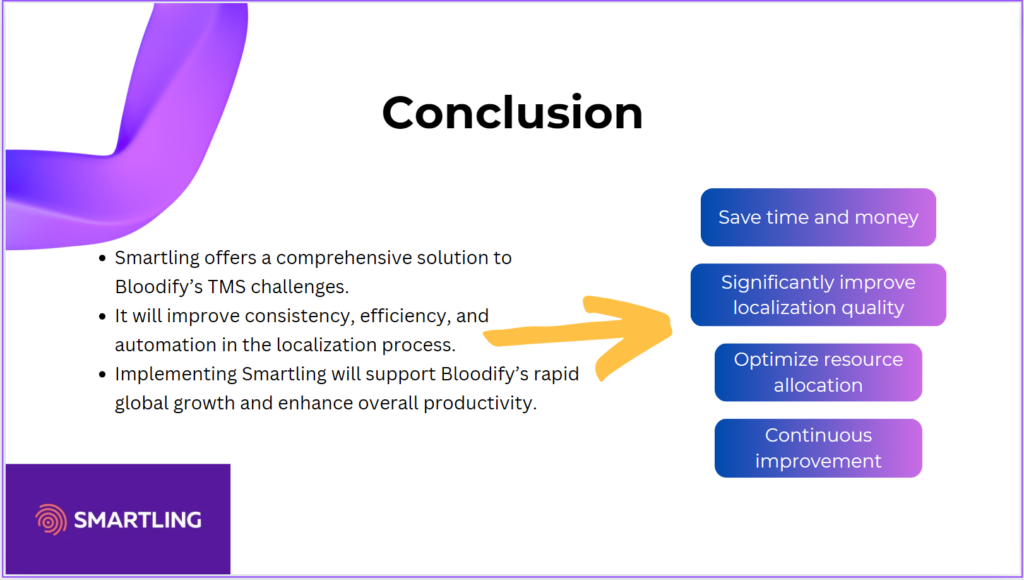
By implementing Smartling, Bloodify will overcome the limitations of its current TMS, ensuring high-quality, efficient, and cost-effective localization.
Conclusion
You can view the PDF of the presentation here.
In this proposal video, I analyze Bloodify’s translation management challenges and propose Smartling as the solution to enhance productivity and streamline localization processes. Watch the video to see how Smartling can support Bloodify’s rapid global growth.